Dental Implants in Mooresville & Troutman: What Makes Someone a Good Candidate?
Losing a tooth often creates more than an empty space. Chewing may feel different, nearby teeth can begin carrying more of the workload, and the gap may become increasingly noticeable when you speak or smile. Dental implants offer a fixed replacement option, but patients often wonder whether their teeth, health, or age will allow them to move forward.
A good implant candidate generally has healthy gum tissue, enough jawbone to support the implant, and a medical history that allows for predictable healing. Those conditions do not have to be perfect at the first appointment. Gum treatment, bone grafting, changes in home care, or better control of a health condition may help someone become a stronger candidate.
The number of missing teeth also does not decide candidacy by itself. An implant may replace one tooth, support a bridge, or help stabilize a larger prosthetic restoration. The evaluation focuses on the condition of the mouth, the available bone, and whether the proposed treatment fits the patient’s needs.
At Curtis Family Dentistry in Mooresville and Troutman, NC, the dental team can examine the area, review your health history, and explain what would need to happen before implant placement. Some patients can begin planning right away, while others may need one or more preparatory steps first.
What a Dental Implant Replaces
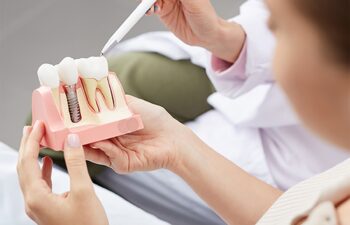
A dental implant is a small post placed in the jaw where a natural tooth root once sat. After the surrounding bone has healed around it, the implant can support a crown, bridge, or denture. The visible tooth is added separately, so treatment usually involves both a surgical and a restorative phase.
For a single missing tooth, an implant-supported crown fills the space without requiring the neighboring teeth to hold a bridge. Several implants may support a fixed bridge when multiple teeth are missing. Implants can also provide added stability for a removable or fixed full-arch restoration.
The right design depends on how many teeth need replacement and how the remaining teeth meet when you bite. Space, bone position, gum shape, and the condition of nearby teeth all influence the plan. The goal is to place support where it can function comfortably rather than simply filling the visible gap.
Healthy Gums Create a Better Foundation
Healthy gum tissue is an important part of implant treatment. Active gum disease can cause inflammation and bone loss around natural teeth, and similar problems can develop around an implant. Treating that infection before surgery gives the area a cleaner, more stable foundation.
Signs of gum disease may include bleeding, swelling, tenderness, persistent bad breath, or gums that have pulled away from the teeth. However, gum disease does not always cause noticeable discomfort. Measurements and dental X-rays may reveal changes that are difficult to see at home.
Patients with a past history of gum disease are not automatically excluded from receiving implants. The condition should be brought under control, and the patient will need to maintain regular home care and professional visits. The dental team may also recommend a closer maintenance schedule after the implant is restored.
The Jaw Needs Enough Bone to Hold the Implant
An implant relies on the jawbone for support, much like a natural tooth relies on its root and surrounding bone. After a tooth is removed, the bone in that area can gradually shrink because it no longer receives pressure from the root. The longer the space has been empty, the more likely it is that some change has occurred.
The amount of bone needed depends on the implant’s location, size, and angle. Front teeth, back teeth, and upper or lower jaw sites each present different spacing and anatomical considerations. A dental examination and three-dimensional imaging can help the team measure the available height and width.
Limited bone does not always bring implant planning to an end. Bone grafting can sometimes rebuild or widen the site before an implant is placed, and some grafts can be completed during the same visit as an extraction. Bone loss can often be successfully managed with grafting or other treatment approaches.
What Bone Grafting Adds to the Process
A bone graft places grafting material in an area where the jaw needs more support. Over time, the body uses that material as a framework while forming new bone. The site may then become wide or strong enough for implant placement.
Some grafts are relatively small and fill the socket left after a tooth is removed. Others rebuild a ridge that has narrowed over several years. In the upper back jaw, a sinus lift may be discussed when there is limited bone beneath the sinus cavity.
Adding a graft usually means allowing more time for healing. The implant may be placed at the same appointment in selected cases, but other sites need several months before the next stage can begin. Imaging and the condition of the remaining bone help the dental team decide which sequence is safer.
The Remaining Teeth and Bite Also Need Attention
Implant planning involves more than studying the empty space. The dental team also checks the neighboring teeth, the opposing teeth, and the way the jaw moves during chewing. These details affect where the implant can be placed and how the final tooth should be shaped.
A narrow space may not leave enough room for an implant of the appropriate size. Teeth may have drifted into the gap, or the opposing tooth may have moved farther into the open area. Orthodontic treatment or adjustment of the restorative plan may be needed before implant placement.
Clenching and grinding also deserve attention because they can place heavy pressure on an implant restoration. A patient who grinds may still be a candidate, although the bite may need to be managed carefully. A protective nightguard may be recommended after the final crown or bridge is placed.
Good General Health Supports Healing
Implant placement is a surgical procedure, so the body needs to heal around the implant afterward. Many people with ongoing medical conditions can still receive implants, provided those conditions are stable and appropriately managed. The dental team will review both current health concerns and previous procedures.
Diabetes is one condition that may affect healing and infection risk, particularly when blood sugar is poorly controlled. A patient with well-managed diabetes may still be considered for treatment, while someone with unstable levels may be advised to improve control first. Coordination with the patient’s physician may be helpful before surgery.
Heart conditions, immune disorders, bleeding concerns, cancer treatment, and previous surgery to the jaw can also affect planning. None of these automatically means implants are impossible. They may change the timing, medication plan, or type of treatment that can be completed safely.
Your Medication List Is Part of the Evaluation
The dental team should know about every prescription medication, nonprescription drug, vitamin, and supplement you take. Some medications affect bleeding, immune response, bone turnover, or the way the mouth heals. That information helps the team plan treatment and avoid preventable complications.
Certain medications used for osteoporosis or cancer deserve particular review because they can affect bone healing in the jaw. The name of the medication, how it is taken, the dose, and how long it has been used all contribute to the decision. A history of these medications does not always rule out implants, but it requires careful assessment.
Patients should not stop or change a medication on their own before implant surgery. The dentist and prescribing clinician can decide whether any adjustment is appropriate. In many cases, no change is needed once the full medical history has been reviewed.
Smoking Can Make Healing Less Predictable
Smoking reduces blood flow to oral tissues and can interfere with healing after implant placement. It is also associated with a greater risk of gum problems and implant complications. The amount smoked and the patient’s broader health can influence the level of risk.
A smoker may still receive an implant, but the dental team will discuss the added concerns before treatment. Reducing or stopping tobacco use before and after surgery can give the tissues a better opportunity to heal. Ongoing smoking may also affect the long-term health of the bone and gum around the implant.
Vaping and other nicotine products should be included in the conversation as well. Nicotine exposure can affect circulation even when no traditional cigarette is involved. Honest information allows the team to provide guidance based on the patient’s actual habits.
Age Alone Does Not Decide Candidacy
Adults are not automatically too old for dental implants. A healthy older adult with adequate bone and stable medical conditions may be a stronger candidate than a younger person with untreated gum disease or heavy smoking habits. Healing ability and oral health carry more weight than the number on a birth certificate.
Implants are generally delayed in children and teenagers whose jaws are still growing. Placing an implant too early can leave the restoration out of alignment as the surrounding teeth and bone continue to develop. Other tooth replacement options may be used until growth is complete.
For older adults, practical considerations may also shape the plan. Hand strength, dexterity, transportation, and the ability to clean around the restoration can affect which design will be easiest to maintain. A technically possible treatment should also work well in daily life.
There Must Be Enough Space for the Final Tooth
A dental implant needs room within the bone, but the crown above it also needs enough space. The neighboring teeth should allow for a natural-looking width, and the opposing tooth must leave enough height for the restoration. A gap that looks large from the front may still be limited below the gumline.
The position of nerves, sinus cavities, and nearby tooth roots can further narrow the available area. Three-dimensional imaging allows the team to study these structures before surgery. This helps determine the implant’s possible length, width, and angle.
When space is limited, the plan may involve orthodontic movement, bone grafting, or a different type of restoration. Making those decisions before surgery reduces the chance of placing an implant where the final tooth cannot be shaped properly.
The Missing Tooth Site Should Be Free of Active Infection
A badly damaged or infected tooth may be removed as part of implant treatment. In some cases, the implant can be placed during the same visit. In others, the site needs time to heal before implant surgery.
The decision depends on the type and extent of the infection, the condition of the bone, and whether the implant can remain stable at placement. A large area of bone loss or active drainage may lead the team to clean the site, add grafting material, and wait. A healthier socket with good surrounding bone may allow a different timeline.
An infection elsewhere in the mouth should also be addressed. Untreated cavities or advanced gum disease can raise the bacterial load around a new implant. Completing necessary dental care first creates a healthier environment for healing.
Daily Cleaning Is Essential After Placement
Implants cannot develop cavities, but the tissue and bone around them can become inflamed. Plaque that remains along the gumline may lead to bleeding and swelling, followed by loss of supporting bone if the problem continues. A patient needs to be willing and able to clean the restoration consistently.
An implant crown is usually brushed and flossed much like a natural tooth. Implant bridges and full-arch restorations may require floss threaders, interdental brushes, or a water flosser to reach underneath. The dental team can demonstrate which tools fit the final design.
Regular professional care remains important after treatment is complete. The team will monitor the gums, bone levels, bite, and condition of the implant restoration. Small changes are easier to manage when they are found during routine maintenance.
Candidacy Includes the Ability to Complete the Process
Dental implant treatment usually takes place in stages. Depending on the case, those stages may include extraction, grafting, implant placement, healing, and attachment of the final tooth. Patients should understand the expected sequence before deciding to begin.
Healing time varies because not every implant site starts in the same condition. A straightforward site may move through treatment faster than an area requiring extensive grafting. Medical history and the stability of the implant at placement may also affect when the final restoration can be attached.
Appointments and home-care instructions are part of the process as well. Returning for follow-up allows the team to check healing and identify concerns early. A patient who understands the timeline is better prepared for the periods when a temporary tooth or healing appliance may be needed.
Missing One Tooth Versus Several Teeth
Someone missing one tooth may receive a single implant and crown. The adjacent teeth remain separate, which can make cleaning straightforward. The implant position still has to support a tooth that fits the space and bite.
When several teeth are missing, one implant is not always needed for every tooth. Two or more implants may support a bridge, depending on the length of the space and the forces placed on it. The number and location of implants are selected to distribute chewing pressure.
Patients missing most or all of their teeth may be evaluated for an implant-supported denture or fixed full-arch restoration. Those plans require a broader look at the jaw, facial support, bite, speech, cleaning access, and condition of any remaining teeth. The best option may differ between the upper and lower jaws.
Having Worn Dentures Does Not Automatically Rule Out Implants
Long-term denture wear often comes with some loss of jawbone, especially when the teeth have been missing for many years. That bone change may affect where implants can be placed, but it does not always make treatment impossible. Imaging can show how much support remains and where it is located.
Some patients may need grafting before receiving implants. Others may have enough bone in selected areas to support an implant-retained denture without rebuilding every part of the ridge. The treatment design depends on both anatomy and the amount of stability the patient wants.
Existing dentures may sometimes be adjusted or used temporarily during treatment. In other cases, a new temporary appliance is made. Planning for that transition helps patients know how they will eat and speak while the implants heal.
When Another Tooth Replacement May Fit Better
Not everyone who is missing a tooth needs an implant. A traditional bridge may be considered when the neighboring teeth already need crowns or when implant surgery is not a good medical fit. A removable partial denture can replace several teeth without implant placement.
Cost, treatment time, available bone, and personal preference also shape the decision. Some patients prefer a fixed option and are comfortable with a longer process. Others may choose a simpler restoration that can be completed sooner.
The dental team can compare how each option affects the surrounding teeth, daily cleaning, future repairs, and chewing. Seeing those differences side by side makes it easier to choose a treatment that fits the patient rather than choosing an implant because it is the most familiar option.
What Happens During an Implant Evaluation
The first visit usually includes an examination of the teeth, gums, bite, and missing tooth area. The team will review how the tooth was lost, how long the space has been present, and whether any symptoms remain. Medical history, medications, and tobacco use are discussed during the same visit.
Dental X-rays help show bone height, nearby roots, and possible infection. Three-dimensional imaging may be recommended to measure the site and locate nerves or sinus spaces. These images allow the team to plan beyond what can be seen from the surface.
After the evaluation, the dentist can explain whether implant placement appears straightforward or whether treatment should begin elsewhere. That may include a cleaning, gum treatment, extraction, graft, or medical consultation. Patients should leave with a clearer sequence rather than a simple yes-or-no answer.
Dental Implant Evaluations at Curtis Family Dentistry
A good dental implant candidate has a healthy or treatable mouth, enough bone for support, and a medical history that allows the site to heal. The patient also needs a stable bite, realistic expectations about timing, and a plan for keeping the restoration clean. When one of those pieces is missing, treatment may still be possible after the concern is addressed.
At Curtis Family Dentistry in Mooresville and Troutman, NC, the dental team can evaluate a single missing tooth, several missing teeth, or concerns with a loose denture. The visit may include imaging, a review of your health history, and a comparison of implant and non-implant options.
Schedule a dental implant consultation with Curtis Family Dentistry to learn whether you are currently a candidate and which steps may improve the foundation for treatment.